Android XR Moves Beyond the Demo: Five Features That Make a Headset Feel More Like a Daily Computer
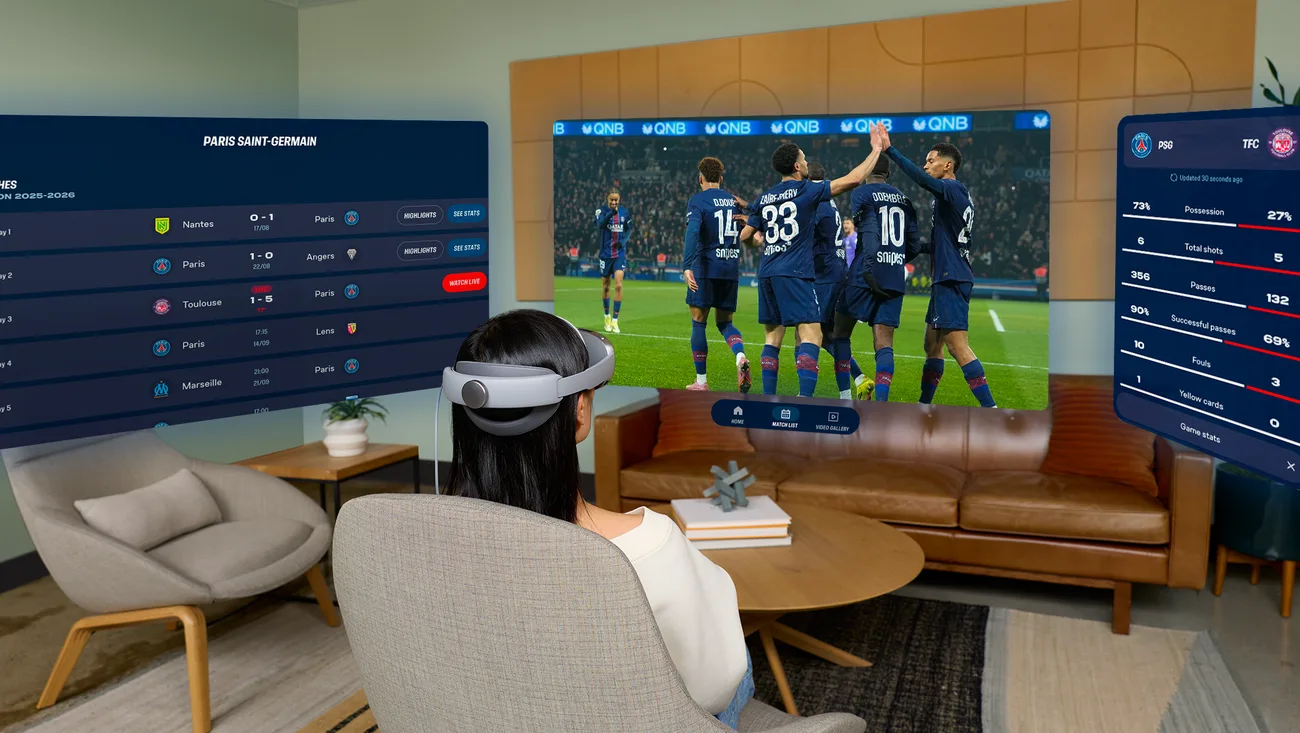
Google has outlined five additions to Android XR that point to a clear goal: making a spatial headset useful after the novelty of the first immersive demo fades. The update, announced for Samsung's Galaxy XR, focuses on bringing familiar computing behaviour into a room-scale interface — from turning 2D media into spatial content to leaving apps in persistent places around a user's space.
One experimental feature uses AI to auto-spatialise 2D photos and videos. Another expands immersive apps and environments. Google is also introducing the ability to pin applications to walls, represent a user's real hands in the home space and resume prior sessions. Taken together, those functions are less about a single breakthrough feature than about continuity: the feeling that the headset remembers where work was left and how a space was arranged.
That continuity is a basic expectation on a laptop or phone. Windows remain where users put them, open documents survive a break and a desktop becomes a personalised working environment. In XR, the same expectations are technically harder because the interface is tied to a physical room, tracking quality, headset comfort and the user's willingness to put the device on again. Persistent spatial placement therefore matters not only as a visual effect, but as a test of whether XR can become a repeat-use computer.
Google also highlighted practical interaction improvements, including hand and eye input updates, accessibility features and Android Enterprise support. The latter is significant because it connects Android XR to the policies and management tools already used by organisations for Android devices. A platform can attract attention through consumer media experiences, but businesses assessing training, design, simulation or distributed work need predictable deployment and administration.
The announcement sits within a broader competition to define spatial computing as a platform rather than a category of isolated devices. Apple's Vision Pro emphasises a tightly integrated hardware and software environment. Android XR's proposition is openness: a platform intended to support multiple hardware makers and familiar Android development pathways. That promise will be tested by the quality of applications, consistency between devices and whether developers can build useful spatial experiences without creating entirely separate products for every headset.
It is also worth separating announced capability from demonstrated daily value. Auto-spatialising content can make ordinary media more engaging, but quality will depend on the source material and processing limits. Pinned apps are useful only if tracking is stable and setup is quick. Session resumption is valuable only if it behaves reliably across real rooms, travel and shared spaces. These are not glamorous problems, but they decide whether a platform becomes part of a person's routine.
Google's update is therefore best read as an attempt to close the gap between a capable headset and a useful computer. The next signal will come from users: whether these features reduce enough friction to make Android XR something they reach for repeatedly, rather than something they occasionally show to a visitor.
Source: Official newsroom.
Comments
Be the first to join the conversation.