Apple Turns Vision Pro Eye Tracking Into an Accessibility Tool for Power Wheelchair Control
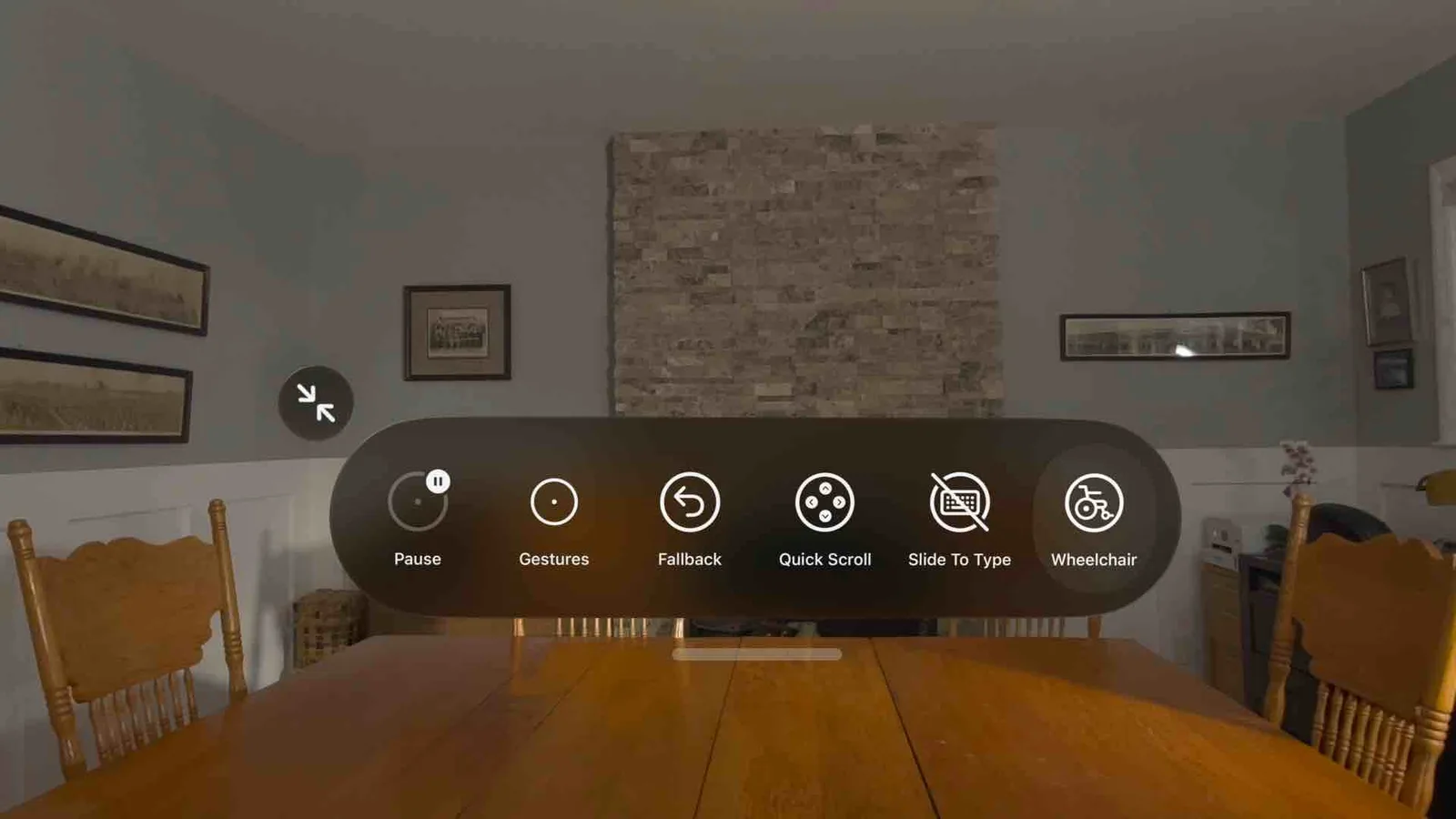
Apple is preparing a new Apple Vision Pro accessibility feature that lets users control compatible power wheelchairs with their eyes. The announcement reframes one of spatial computing's most familiar technologies — eye tracking — as an assistive input system for people whose mobility makes conventional joystick control impractical.
According to Apple, the feature will work with compatible alternative drive systems from Tolt and LUCI in the United States, supporting both Bluetooth and wired accessories. Apple says Vision Pro's eye tracking does not require frequent recalibration and can operate across a range of lighting conditions. The company plans to expand compatibility by working with developers.
The significance is not that a headset has gained another interface trick. It is that an interaction method usually discussed in terms of selecting windows, navigating immersive environments or playing games can become part of a person's physical independence. For people who use alternative drive controls, the question is not whether eye input feels futuristic; it is whether it is dependable, comfortable and sufficiently precise for an essential daily activity.
Apple announced the wheelchair-control capability alongside a wider set of accessibility updates powered by Apple Intelligence. Those include more detailed image and environment descriptions in VoiceOver and Magnifier, natural-language controls for Voice Control, and on-device generated subtitles for video without existing captions. Vision Pro itself is also set to gain Vehicle Motion Cues, face gestures for taps and system actions, and new eye-based selection options through Dwell Control.
The accessibility work also illustrates a useful design principle for XR: its sensors and spatial interfaces have the most durable value when they remove a real barrier rather than simply add spectacle. Eye tracking in a headset can be extraordinarily precise, but usefulness depends on the entire system around it — device fit, calibration, latency, compatibility, safety testing, user training and technical support.
There are important limits to keep in view. This is a preview of features scheduled for later in 2026, not evidence of broad availability today. The initial compatible systems are limited, the feature is announced for the United States, and suitability will vary by individual, wheelchair configuration and clinical or assistive-technology guidance. The feature should therefore be reported as a development in accessibility technology, not as a universal replacement for existing mobility controls.
Still, the announcement gives Vision Pro a more grounded accessibility story. Spatial computing is often evaluated through entertainment, office productivity and media. This use case asks a more meaningful question: can a new input system give someone a safer, more practical way to act independently in the physical world? That question is harder than a product demo, and much more important.
Source: Official newsroom.
Comments
Be the first to join the conversation.